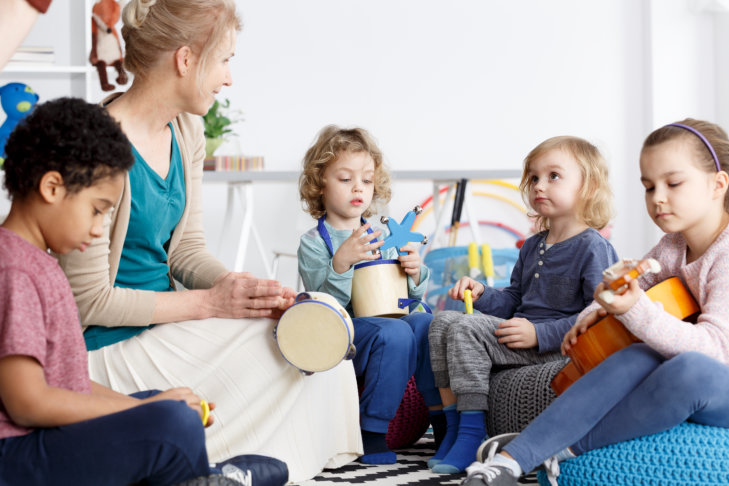
Introducing music and movement activities in early childhood education provides young learners with opportunities to explore sound, rhythm, and motion in a fun and engaging way. These activities are not only enjoyable but also contribute significantly to children’s overall development. From improving cognitive abilities to enhancing social interaction, incorporating musical experiences into daily routines creates a dynamic learning environment that supports growth across multiple domains.
- Cognitive Development
Music and movement activities play a significant role in early childhood cognitive growth. Engaging children in rhythm exercises, clapping games, and simple melodies helps improve memory, attention, and problem-solving skills. Children exposed to varied musical patterns often display improved listening abilities and heightened curiosity, laying the foundation for future academic success. - Physical Coordination
Movement-based activities strengthen motor skills and body awareness. Dancing, marching, or gentle stretching routines help children develop balance, coordination, and spatial orientation. These exercises also contribute to healthy physical growth by promoting flexibility and muscle strength. Combining music with movement encourages children to synchronize their actions with auditory cues, which reinforces both gross and fine motor development. - Social and Emotional Skills
Participating in group music and movement exercises nurtures collaboration and emotional expression. Singing together, performing rhythmic patterns, or engaging in call-and-response games allows children to communicate, share, and respect others’ ideas. These activities often increase self-confidence and reduce anxiety, as children learn to express feelings through rhythm, tone, and gestures in a supportive environment. - Creativity and Imagination
Music and movement stimulate creativity by encouraging exploration and improvisation. When children experiment with sounds, instruments, or free-form dance, they discover new ways to express ideas and emotions. These creative experiences enhance problem-solving and flexibility, allowing children to approach challenges with innovative thinking.
Incorporating music and movement into early learning programs provides children with opportunities to grow intellectually, physically, socially, and creatively. Parents and educators seeking guidance on effective activities for young learners are encouraged to contact the Montessori Learning Institute for expert advice.